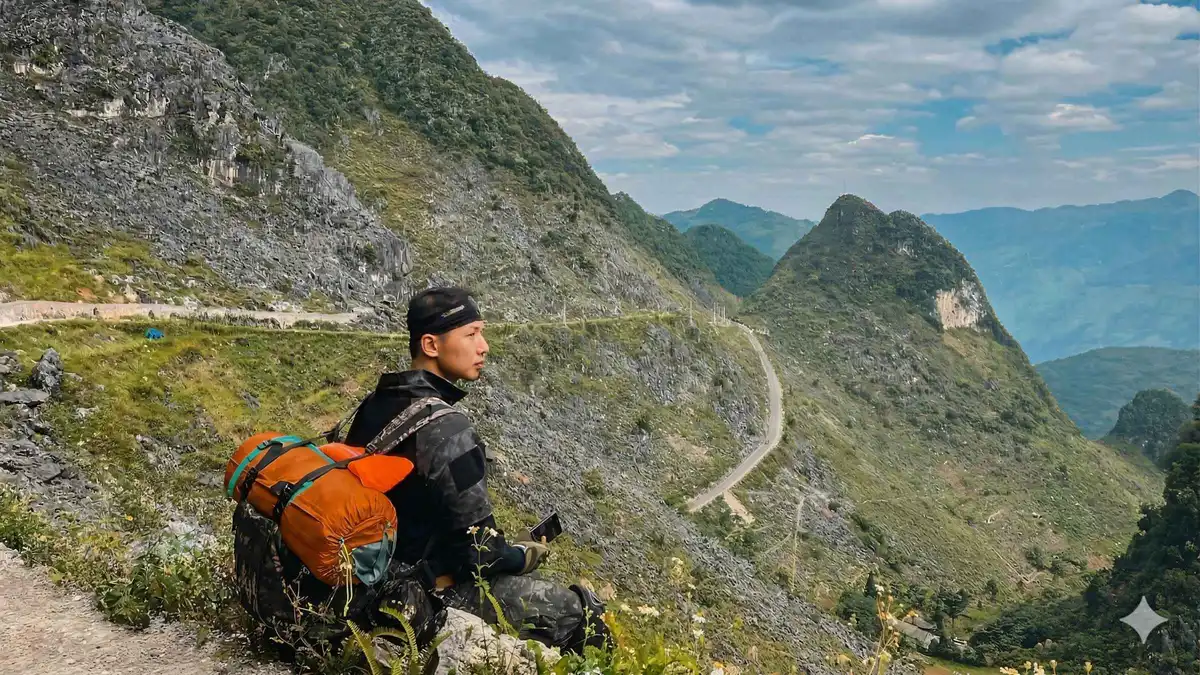
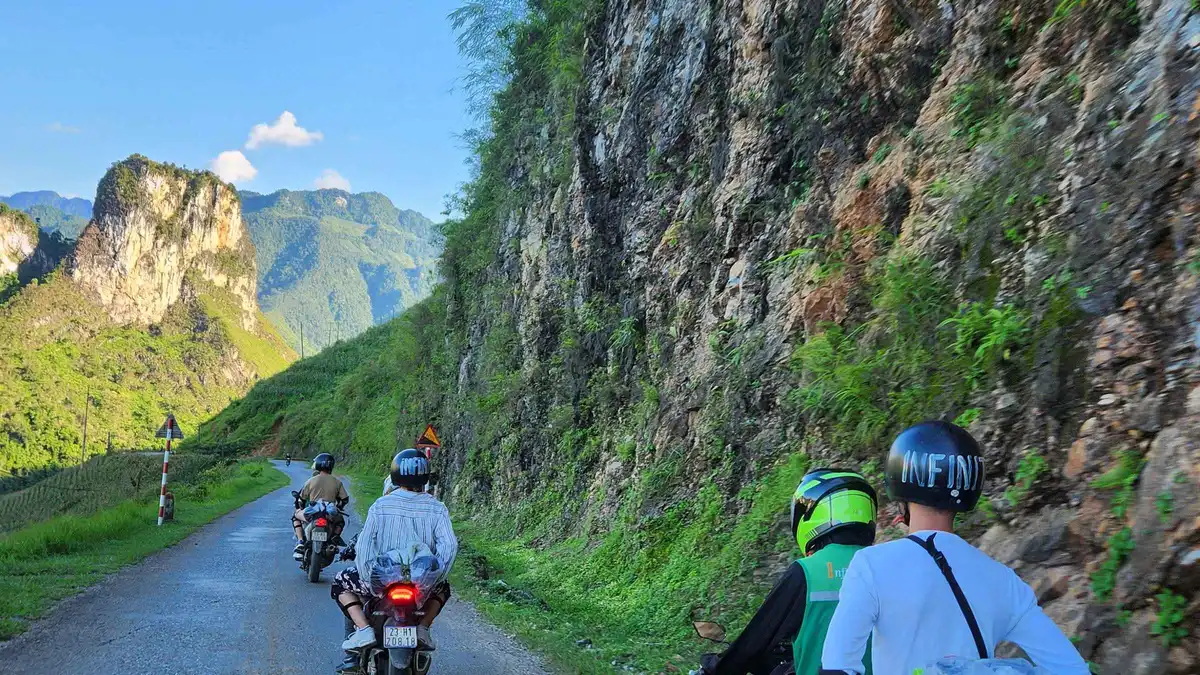
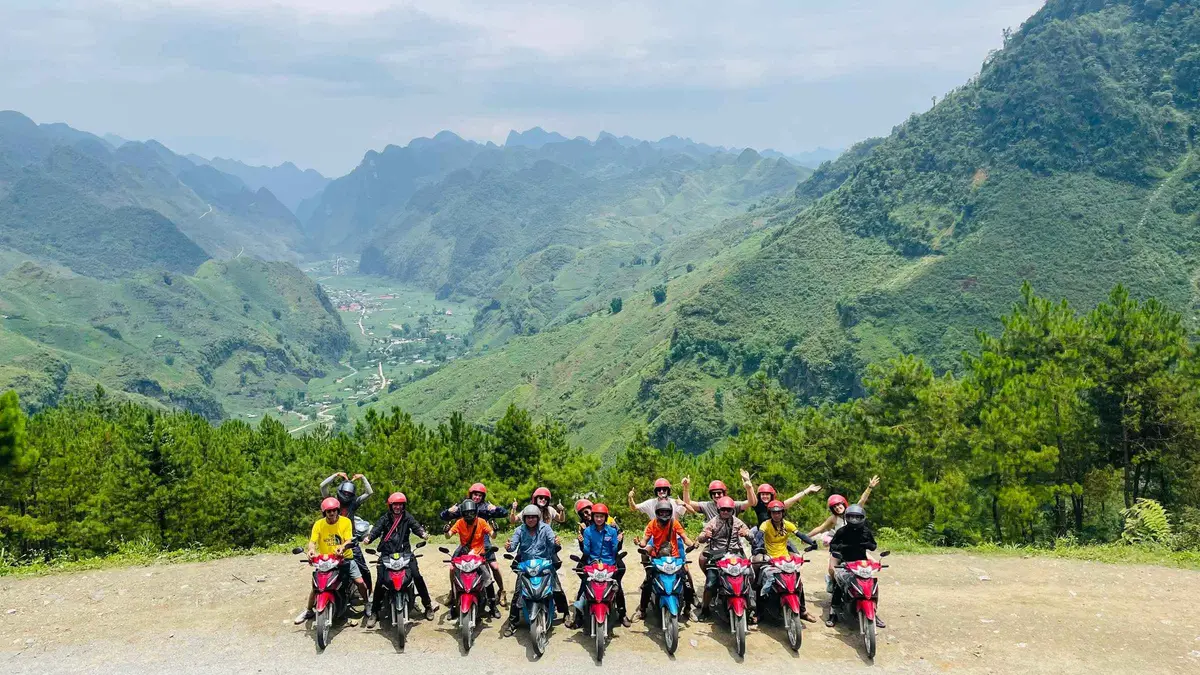
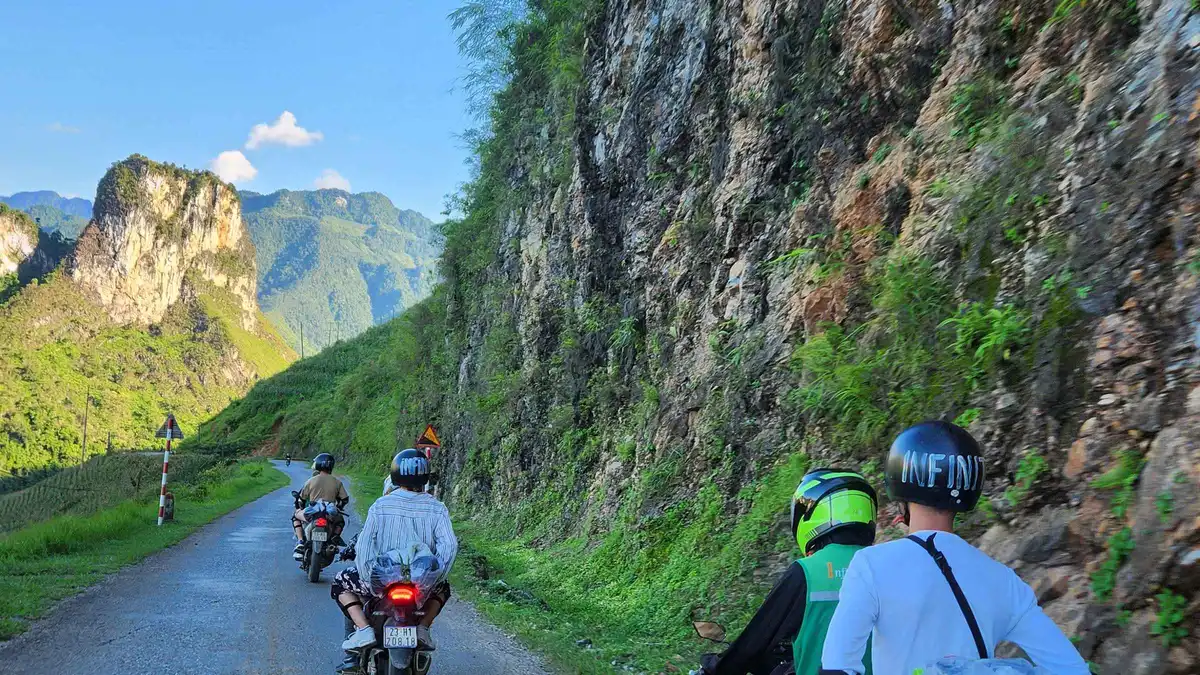
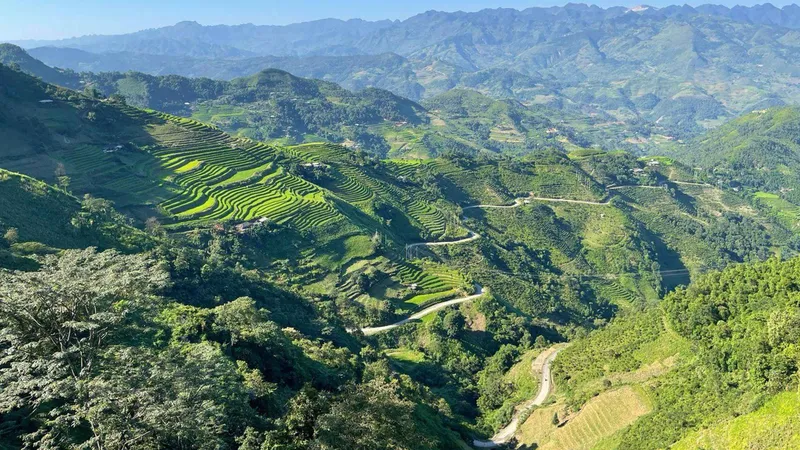
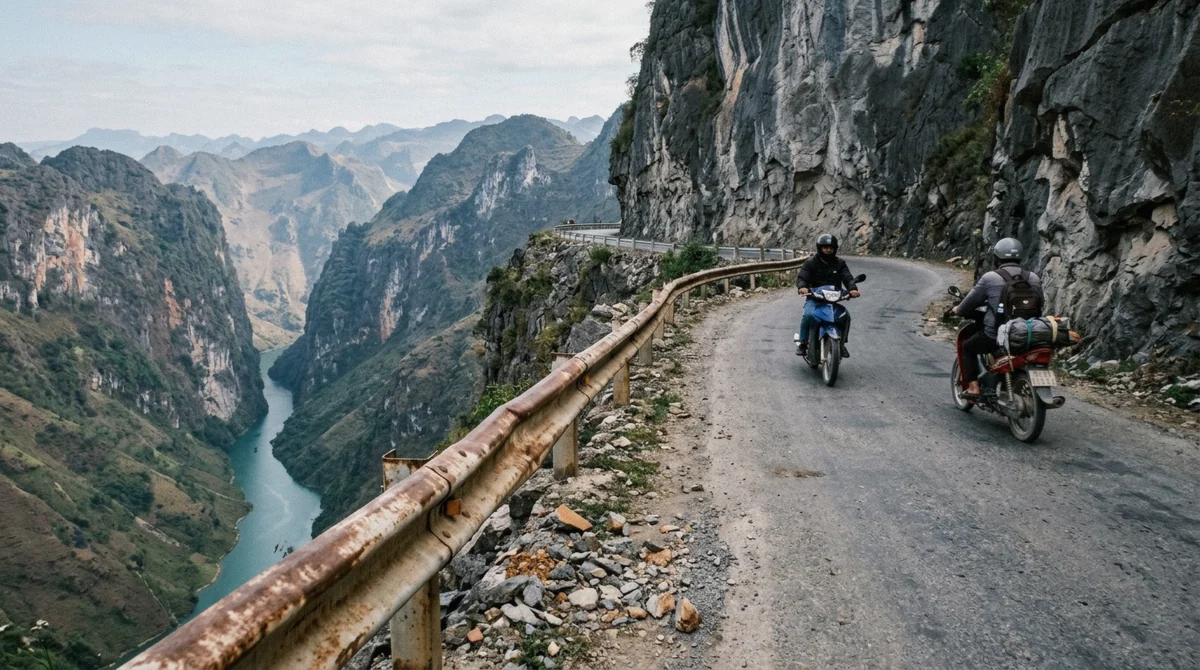
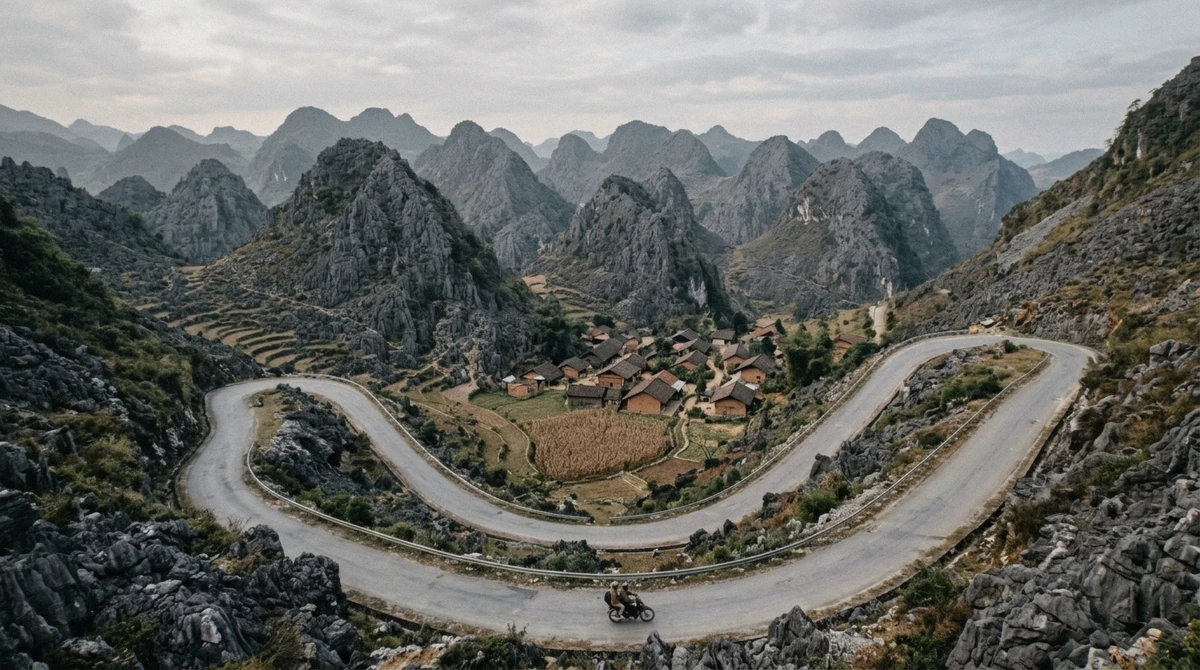
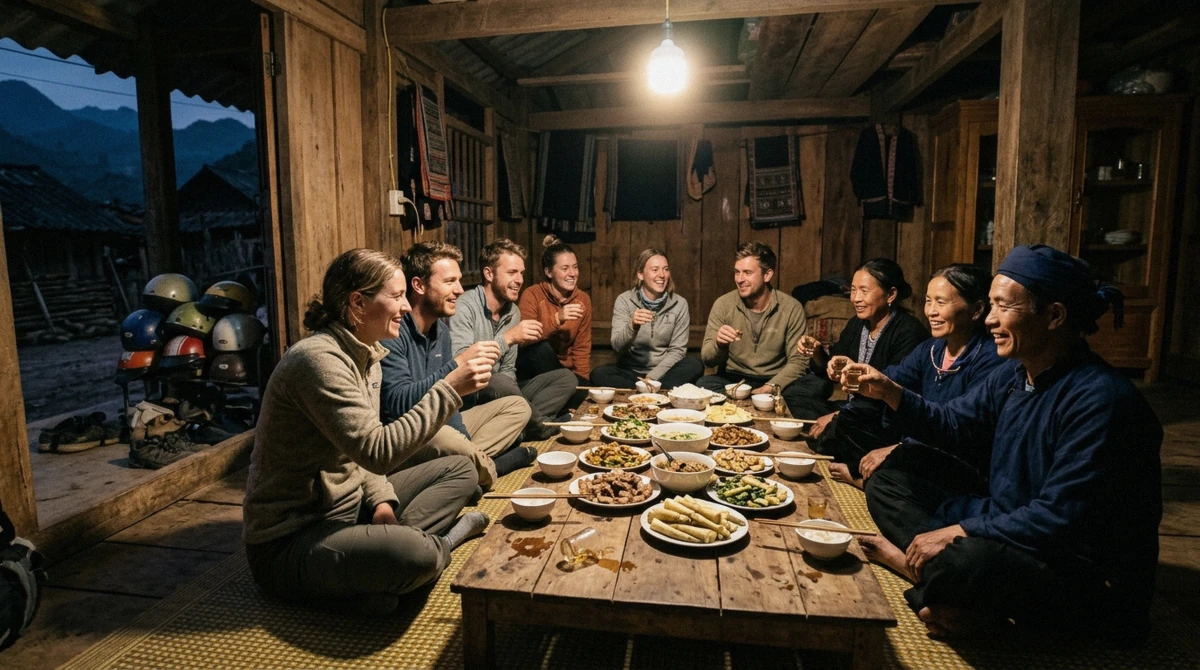
Bac Sum Pass at first light, the Ma Pi Leng cliff road, dinner at a Du Gia homestay. Pick the Ha Giang loop motorcycle tour that fits your days and book with free cancellation.
A Ha Giang loop motorcycle tour runs about 350 km through the mountains north of Ha Giang city, takes three days for most riders, and costs $123.55 to $231.25 per person on the tours listed here. Almost everyone rides pillion behind a local easy rider, because self-driving legally needs a home motorcycle licence plus a 1968-convention International Driving Permit.
Cheapest way on: the two-day version at $123.55, which covers the plateau but skips Du Gia.
Want the villages and a slower pace? The four-day trips at $226.66 to $231.25 add the side loops and the waterfall swim.
Riding yourself: only one listing here is sold as self-drive, at $201.95, and you must show a licence and IDP at checkpoints.
Budget an extra $10 for the border permit plus about 1,000,000 VND (roughly $38) for coffee stops, the Nho Que boat and tips.
Every tour on this page cancels free up to 24 hours ahead.
Free cancellation 24h ahead
Reserve now, pay later
English-speaking guides
Hanoi and Sapa pickup
350 kmFull loop distance
from $123.55Per person, two days
2,716Verified reviews across these trips
$10Border permit, paid on arrival
most reviewed
The trip most riders book
Easy Rider Loop, 2 or 3 Days, Sleeper Bus Both Ways
★★★★★★★★★★4.9(787 reviews)
Chestnut Travel's easy rider trip, the most reviewed on this page at 787 ratings. Pick the 2-day or 3-day version at checkout; the Nho Que boat is included.
Sorted by what actually separates them: how many days you ride, whether you sit behind a guide or take the handlebars, and where you get picked up.
from $164.33Most Reviewed — 787 Reviews
Easy Rider Loop, 2 or 3 Days, Sleeper Bus Both Ways
★★★★★★★★★★4.9(787 reviews)· 2 - 3 days
Chestnut Travel's easy rider trip, the most reviewed on this page at 787 ratings. Pick the 2-day or 3-day version at checkout; the Nho Que boat is included.
Three riding days on the full circuit with a capped group size, leaving Hanoi by sleeper bus. Rated 5.0 by 328 travellers, the highest score on this page.
The Short Loop: 2 Days, 1 Night from Ha Giang City
★★★★★★★★★★4.9(83 reviews)· 2 days
The compressed circuit for travellers short on days: the Dong Van plateau and Ma Pi Leng in two riding days. The cheapest way onto the loop at $123.55.
The standard three-day circuit with an extra Ha Giang night included and hotel pickup in Hanoi. Useful if your bus arrives at 04:00 and you want to sleep.
Everything below was checked in August 2026 at a rate of about 26,000 VND to $1.
350 kmThe standard circuit, about 217 miles
3 daysWhat most riders take, with two and four day versions sold
120,000 VNDNho Que boat through Tu San canyon, about $5
200,000 VNDBorder permit for foreign riders, about $8 to $10
1,000,000 VNDCash to carry for coffee, snacks and tips, about $38
2,613 mmAnnual rainfall at Ha Giang city
What to know before you book
The route, and why it takes three days
The circuit leaves Ha Giang city, climbs Bac Sum Pass into Quan Ba, then runs north through Yen Minh onto the Dong Van karst plateau before turning south at Meo Vac and dropping back down. That is roughly 350 km, or 217 miles, on roads that rarely hold a straight line for more than a few hundred metres.
Riders average 100 to 150 km a day, which sounds slow until you count the switchbacks. Three days is the standard sale, and it does cover the whole circuit. The four days versions add Du Gia, the side loops and time to actually sit at the viewpoints instead of photographing them from the saddle.
The border permit, and what changed in 2026
Quan Ba, Yen Minh, Dong Van and Meo Vac sit inside a border area, so foreign passport holders need a border area entry permit to ride through them. The paperwork is not new. Enforcement is: operators across the loop began telling customers that checks tightened from 1 June 2026, and several GetYourGuide listings now print the charge in their exclusions as a $10 fee paid on arrival.
One honest caveat. No published notice from Vietnamese immigration or the provincial police confirms that date, so treat it as operator practice rather than a law you can look up. In practical terms it makes no difference to you: send your passport details when you book, your guide files the permit, and you pay around 200,000 to 250,000 VND, roughly $8 to $10, at the start.
Send passport scans at booking, not on arrival
Carry the passport itself, not a photo, through the checkpoints
Budget 200,000 to 250,000 VND per person on top of the tour price
Riding independently means applying yourself at a police or immigration office in Ha Giang city
Easy rider, or take the handlebars
An easy rider is a local guide who rides the bike while you sit behind with a camera. Most people on the loop travel this way, and every operator on this page sells it. It is not a downgrade. You get the views, someone who knows where the gravel starts, and no negotiation with a police checkpoint.
Riding yourself is legal only with a motorcycle licence from home covering that engine size plus an International Driving Permit issued under the 1968 Vienna Convention. Police want both documents together, and checkpoints at Bac Sum and Yen Minh do impound bikes. Learning to ride a semi-automatic the morning you start is how people get hurt, and the roads north of Yen Minh are the wrong classroom.
What the price covers
The listed price usually buys the bike, the fuel, every meal, the homestay and hostel nights, and the sleeper bus from Hanoi and back. That is why a three-day tour at $186.90 is better value than it first looks: from the moment the bus leaves the Old Quarter you are not paying for anything else on a normal day.
What sits outside it is small and constant. Coffee stops appear every hour on the loop and none of them are included. Drinks, tips, souvenirs and the boat all come out of your pocket, which is why guides tell you to carry about 1,000,000 VND, roughly $38, in small notes. Card machines effectively do not exist once you leave Ha Giang city.
Item
Usually included
You pay
Motorbike, fuel, guide
Yes
Nothing
Meals and homestay nights
Yes
Nothing
Hanoi sleeper bus, both ways
Yes on Hanoi departures
Nothing
Border permit
No
200,000 to 250,000 VND, about $10
Nho Que river boat
On some tours only
120,000 to 150,000 VND, about $5
Coffee, drinks, snacks
No
50,000 to 100,000 VND a day
Tips for guide and rider
No
Whatever you think is fair
Getting to Ha Giang
The sleeper bus from Hanoi leaves around 21:00 and takes 6–7 hours, which puts you in Ha Giang city near 04:00. You sleep the rest of the night in the operator's hostel, eat breakfast, get a short lesson on the bike, and ride out around 09:00. Day buses exist and cost the same, and they are the better choice if you know you cannot sleep sitting up.
September to November is the window worth planning around: the summer rain has stopped, the buckwheat flowers on the plateau in late October, and the air clears enough to actually see across the Nho Que gorge. March and April are the second-best stretch.
June and July are the wettest months of the year here, over 380 mm each, and a wet limestone road is a different vehicle under you. Fog is the one thing no season prevents. It can sit on Ma Pi Leng for a full morning in any month, and no operator will refund the view.
The stops that make the loop
In the order most three-day itineraries hit them, riding anticlockwise out of Ha Giang city.
Heaven Gate, Quan BaFirst real viewpoint, over the Tam Son valley and the twin mountains
H'Mong King's PalaceThe Vuong family compound at Sa Phin, built in a mix of Chinese, French and H'Mong style
Lung Cu Flag TowerVietnam's northernmost point, a detour some three-day tours skip
Ma Pi Leng PassThe cliff road between Dong Van and Meo Vac, and the reason people come
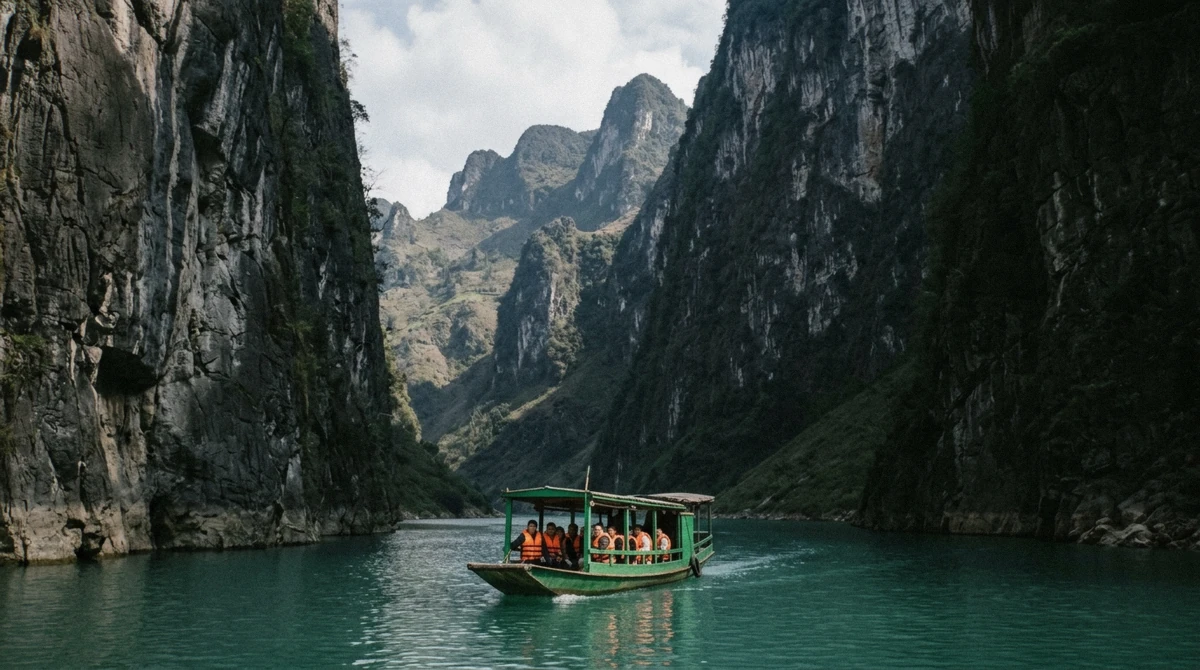
Nho Que RiverBoat through Tu San canyon, the deepest gorge in Southeast Asia
The Ma Pi Leng skywalkAlso sold as the Sky Path: a short walk out onto the cliff face above the river
Du Gia waterfallSwimming stop on day three of the longer itineraries
Du Gia villageHomestay night in the rice fields, where the happy water comes out after dinner
Itineraries vary by operator. Lung Cu and Du Gia are the two stops most often dropped when a tour is compressed into two days.
Where the loop runs
The circuit sits between 22.8 and 23.4 degrees north, against the Chinese border. Ha Giang city, at the bottom, is where every tour starts and ends.
Ha Giang cityStart and finish, 6–7 hours from Hanoi
Quan BaHeaven Gate, about 45 km in
Yen MinhStandard lunch stop on day one
Dong VanNight one on most three-day tours
Meo VacThe far end of Ma Pi Leng Pass
Administrative note: Ha Giang stopped being a province on 12 June 2025, when it was merged into Tuyen Quang province. The route, the town and the tours are unchanged, and everyone still calls it Ha Giang.
Rain and temperature, month by month
Ha Giang city averages, from 20 years of reanalysis data. Rainfall is what decides the ride; the temperature barely moves between May and September.
124mmJanuary18°C
102mmFebruary21°C
133mmMarch24°C
177mmApril28°C
337mmMay30°C
433mmJune31°C
388mmJuly31°C
330mmAugust31°C
248mmSeptember30°C
130mmOctober28°C
117mmNovember24°C
94mmDecember19°C
Best riding (October to April)
Wet season (May to September)
Nights on the plateau run 8 to 10 degrees colder than these day figures, and Dong Van can drop near freezing in January.
On the road
How dangerous is it, honestly
People search for Ha Giang loop deaths, and the search is fair. The road is narrow, often has no barrier, and shares its width with trucks working the widening projects. Falls happen most days somewhere on the circuit. Almost all of them involve a rider who had never handled a semi-automatic before that morning, on gravel, going downhill.
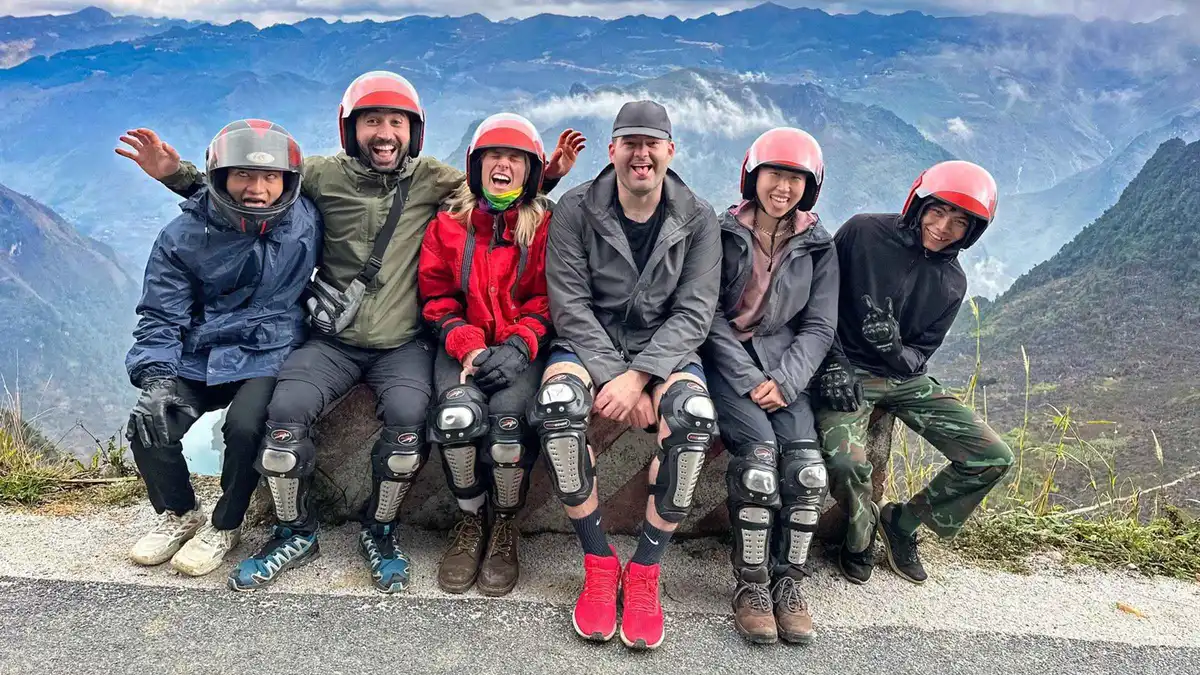
Nobody publishes a casualty figure for the loop, and any site that quotes one is guessing. What can be said plainly: riding pillion with a local guide removes most of the risk that riders create for themselves, and a helmet that meets ECE or DOT standards is worth asking about before you book, because the standard-issue plastic shells are not that.
Check your travel insurance before you leave. Most standard policies exclude motorcycle riding entirely, and the ones that cover it usually require the licence and permit you would need to be riding legally in the first place. As a pillion passenger you are generally covered, but read the wording rather than assuming.
What to pack
Your main bag stays behind in Hanoi or at the Ha Giang hostel. What comes on the bike is a small daypack, strapped down and wrapped in plastic, and you will not reach it while riding.
A daypack that closes properly, nothing loose or dangling
Warm layers for the evenings, even in summer, because the plateau sits above 1,000 m
Waterproof shoes rather than sandals, and a second pair of socks
A buff or scarf for the dust and the wind
Sunglasses, which are almost impossible to buy once you leave Ha Giang city
Cash in small notes, because nothing on the loop takes cards
Any medication you need, in your daypack rather than the strapped bag
Nights, food and happy water
Dinner at a homestay is served family style at a low table, and it comes with corn liquor the hosts call happy water. Shots are poured for the table, and refusing after two or three is fine. Nobody takes offence, and riding hungover on Ma Pi Leng is worse than being the person who said no.
Accommodation is basic in the way that word actually means: shared rooms with mattresses along the wall, cold showers some nights, and a karaoke machine that runs until someone unplugs it. Tours that promise private rooms charge for them, and on the four-day trips that upgrade is usually worth the difference.
Two days, three days or four
Two days is the compressed version. You see the plateau and Ma Pi Leng, and you skip Du Gia and most of the villages. It works if Vietnam has already eaten your calendar, and at $123.55 it is the cheapest way onto the road.
Three days is what almost everyone books. Four days changes the character of the trip rather than just adding distance: the side loops, the waterfall, longer stops, and enough slack that a fogged-in morning does not cost you a landmark.
What riders said afterwards
★★★★★★★★★★
Very nice tourguides and felt very safe with the drivers. The time in between the stops were just right. The tour was one of our highlights in Vietnam. Me and my partner's safe drivers stayed together the whole time so we could keep an eye on each other.
Great trip. Unreal value for money. Tony was safe and fun. Breathtaking views. I did the 2 day tour. Felt like that was plenty of time to do everything. I would recommend the sleeper bus.
Super great activity to be done by people of all ages. The motor bike riders and guides were excellent and always put safety first and saw to any of our needs. We became a complete family, young and old.
The Nho Que boat runs about 30 minutes and costs 120,000 to 150,000 VND, roughly $5, unless your tour lists it as included.
How to pick between these tours
Count the nights, not the days
A tour sold as three days usually means two nights riding plus a night on the bus. Read the accommodation line before comparing prices.
Ask the group size
Eight riders stop where they want. Twenty do not, and the last three arrive at every viewpoint as the first three leave.
Check whether the boat is in
The Nho Que cruise is included on some listings and sold at the pier on others. It is a small sum that tells you how the operator prices everything else.
Look at where it starts
Hanoi departures include the sleeper bus. Ha Giang departures assume you got yourself there, which is cheaper if you are already north.
Decide about the handlebars early
If you want to ride, you need the licence and the IDP in hand before you book, not a plan to sort it out later.
Pay for the private room if you sleep badly
Three nights in a shared homestay room after 150 km a day is the complaint that shows up most in reviews.
Easy rider, self-drive or a jeep
The same route, three ways of covering it. Cost differences below are on top of a standard three-day tour price.
Easy rider
Self-drive
Jeep or car
Who it suits
Anyone, no experience needed
Riders with real off-road-ish experience
Bad backs, bad knees, bad weather
Paperwork
None beyond the permit
Home licence plus 1968 IDP
None
Views
Best, your hands are free
You watch the road, not the gorge
Good, through glass or an open top
Risk
Carried by a local rider
All yours, and insurers know it
Lowest
Price effect
Included in listed prices
About the same, sometimes less
Adds roughly $30 to $60 a day
Convertible jeeps run the same circuit and most operators will swap you into one if rain sets in, though not always at the last minute.
Questions riders ask before booking
How much does a Ha Giang loop motorcycle tour cost?
From $123.55 for the two-day trip to $231.25 for the four-day version, per person, including bike, guide, meals and accommodation. Add roughly $10 for the border permit and about 1,000,000 VND, near $38, in spending money.
Do I need a permit for the Ha Giang Loop?
Foreign passport holders need a border area entry permit for the districts the loop passes through. It costs 200,000 to 250,000 VND, about $10, and your operator files it from your passport details. Operators report tighter checks since 1 June 2026, though no official notice confirms that date.
Can I drive the motorbike myself?
Only with a motorcycle licence from home for that engine size plus an International Driving Permit issued under the 1968 Vienna Convention. Police check both together and checkpoints impound bikes. One tour here is sold specifically as self-drive, and the licence and IDP rules are set out in full.
What is an easy rider?
A local guide who rides the bike while you sit behind. It is how most people do the loop, including on the most-reviewed trip on this page, and it needs no licence, no permit paperwork of your own and no experience.
Is the Ha Giang Loop dangerous?
The roads are narrow, unbarriered and shared with construction trucks, and falls are common among first-time riders. Nobody publishes a reliable death toll, so treat any number you see as invented. Riding pillion removes most of the risk, and travel insurance that explicitly covers motorbikes is worth the premium.
September to November, when the rain has stopped and the buckwheat flowers. March and April are the next best. June and July each average more than 380 mm of rain, and fog can close the Ma Pi Leng views in any month.
How do I get to Ha Giang from Hanoi?
By sleeper bus, leaving Hanoi around 21:00 and taking 6–7 hours. It is included on every Hanoi departure here, both directions, and the six Hanoi trips are compared separately. Coming from Sapa instead, this trip is built around that transfer.
How much is the Nho Que river boat?
120,000 to 150,000 VND, roughly $5, for about 30 minutes through Tu San canyon. Some tours include it and some sell it at the pier, so check the inclusions before you assume.
What should I pack for the Ha Giang Loop?
A small daypack only, since your main bag stays in Hanoi or at the hostel. Pack warm layers for the plateau nights, waterproof shoes, a buff against the dust, sunglasses, any medication, and cash in small notes. Rain gear and helmets come from the operator.
Is Ha Giang still a province?
Not officially. Ha Giang was dissolved as a province on 12 June 2025 and merged into Tuyen Quang province. Nothing about the route or the tours changed, and every operator, map and road sign still says Ha Giang.
Your guide
Vang Mi Co
Easy rider and route guide, Ha Giang · riding the Dong Van plateau since 2017
Rides the loop out of Ha Giang city most weeks of the season, and has watched it go from a few hundred riders a year to the buses that now leave the Old Quarter nightly. Checks what each listing here actually includes against what happens on the road, and will say when the two-day version is the honest answer for your calendar.
Pick your dates while the dry season slots are open.
 Ha Giang Loop Motorcycle Tour
 from $164.33Most Reviewed — 787 Reviews